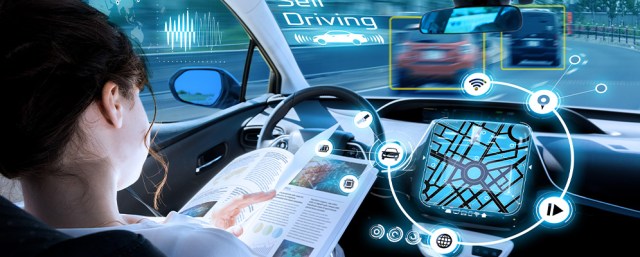
Here’s a relatively new term you might not have come across: Vehicle-to-everything (V2X). It refers to the communication between a vehicle and any other entity that may affect, or may be affected by, the vehicle. Check this Wikipedia link for the full technical details. Phew!
The main motivations for V2X are said to be road safety, energy savings, traffic efficiency, and … mass surveillance!
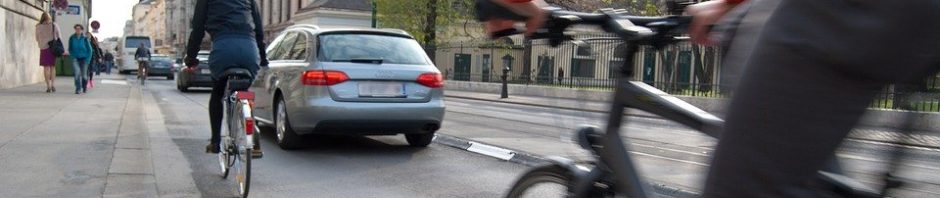
A German bicycle manufacturer, is working on equipping its high-end e-bikes with proximity beacons to improve cyclist safety on the roads. The aim is to enable sensor-equipped vehicles to detect V2X-equipped bicycles, potentially preventing accidents.
Peter Norton, Associate Professor of History in the Department of Engineering and Society at the University of Virginia says:
“In theory, V2X technology allows sensor-equipped motor vehicles to know in advance there’s a V2X-equipped bike nearby…
“Beacons may increase the risk for cyclists because, if they give drivers the message that the car is watching out for cyclists, but the car is actually not doing that particularly well, then we make the situation for cyclists more dangerous…
“If bicyclists must ride with Radio Frequency Identification beacons—or similar—the logical next step is for pedestrians to also sport RFID technology…
“The auto industry is interested in getting pedestrians and cyclists to transmit real-time location information because it’s perhaps the only way AVs (autonomous vehicles) can operate in dense cities…
“What about children too young for smartphones? Should a transponder be placed in an item of clothing instead? What if the child ran outside without wearing their beaconised baseball cap?…
“If the beacon always needed to be on the person, logically, that means it would have to be embedded in the body: are we ready for chipping all humans?”
“If the tech turns out to actually make cycling safer for those who have it, but more dangerous for those who don’t, does that become grounds in policy for requiring all cyclists to have the necessary equipment for cars to detect them? If that’s so, then we now have problems about access to cycling among those with low budgets, or deterring cycling in a society where we need more, not less for lots of reasons, including sustainability and public health”
Legendary Transport Writer, Carlton Reid recently wrote an article in Forbes (https://tinyurl.com/bdevhur9) noting that whilst V2X technology has been deployed successfully in street furniture in some places, the application on cyclists is controversial as it may pose risks to those without beacons, leading to concerns about exclusivity and discrimination. Because only beacon-equipped individuals would be detected, there may be potential blaming of non-equipped cyclists for accidents.
Anna Gurnhill, iconic cultural geographer based in Canberra commented:
“Whoa! While I get the merit of the proposal, there’s some really interesting food for thought in this article. My simplified response – we really need to reduce the number of cars on our roads by making active and public transport a reality. By ‘reality’, I mean all the enabling policy, regulations, incentives, infrastructure, cultural change, urban planning and more.”
Chips with that?
And what about the potential need for beacons leading to chips being embedded in the body? A pretty big ethical dilemma!
In conclusion, the use of V2X technology on bicycles may enhance cyclist safety in some circumstances, but it also poses challenges related to exclusivity, privacy, and accessibility. While proponents see it as a step towards a safer future, critics fear that it could lead to discrimination against unequipped cyclists and pedestrians, undermining the goal of inclusive and sustainable transportation.
And it concerns me that this is another technical “fix” to enable the auto companies’ dream for continued sales by moving into AI controlled self-driving vehicles (AVs) that need this kind of technology to be introduced to enable their dream to come true.
Instead…maybe we simply need to follow Anna’s advice and have much greater concentration on active transport, leading to fewer cars and safer roads.


 Whitehorse Active Transport Action Group Inc.