Yet another city announces 30km/hr.with the beautiful historic city of Tallinn in Estonia joining other enlightened cities like Paris who wan to make their streets safer and ecologically better. The maximum speed allowed will be 30 km/h on a number of inner district roads and 40 km/h on some of the larger streets in the city centre.
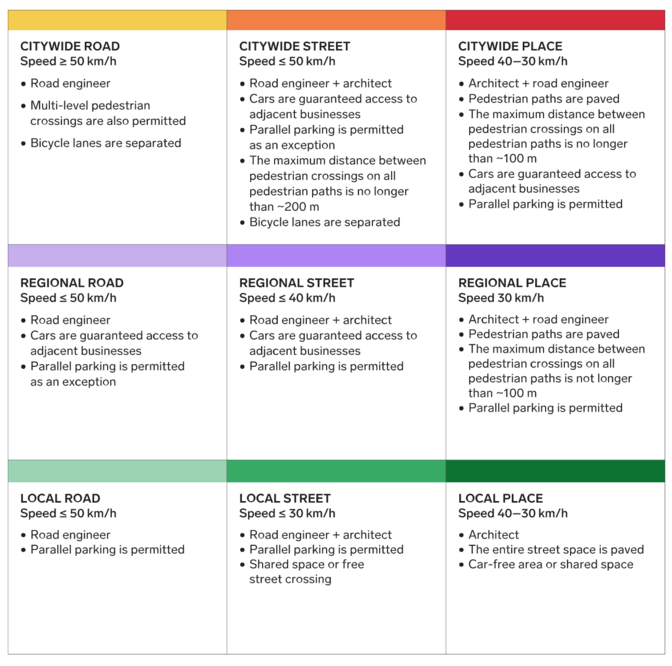
New plans for the city will categorise the city’s streets and roads into nine categories as shown.
Deputy mayor Andrei Novikov said a precondition for lowering the speed limit in the city centre is the reconfiguration of the traffic light programmes, but this may take longer than planned due to a shortage of specialists. “Lowering the speed limits without reconfiguring the traffic lights will not achieve the desired result,” he said.
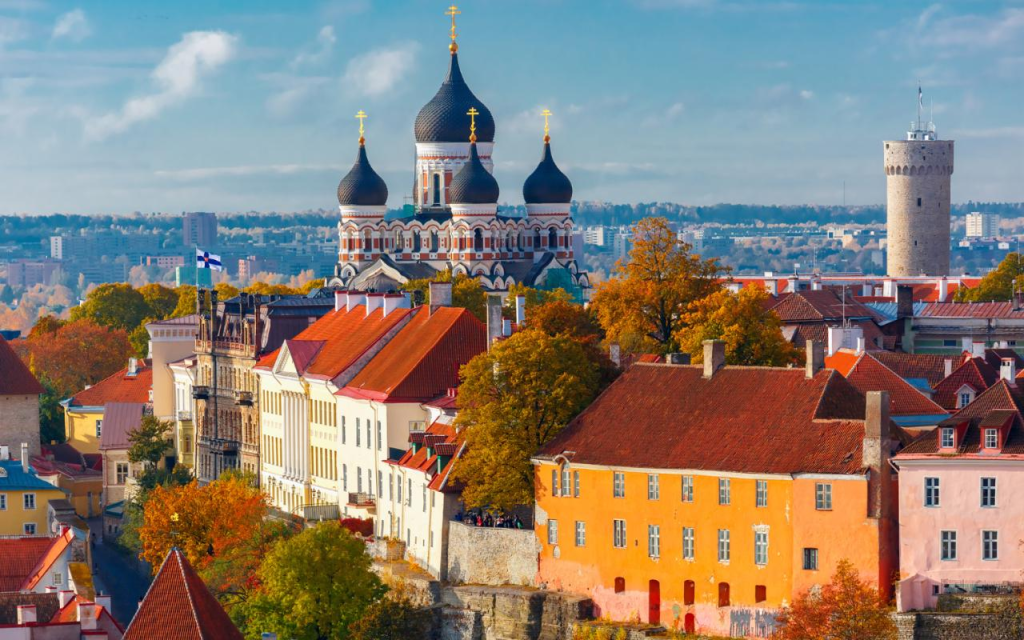
Tallinn is a beautiful historic Hanseatic city. Image credit – The Daily Telegraph
Eliisa Puudersell, CEO of the non-governmental organisation, Elav Tänav, (or Lively Streets – check this link too) welcomed Tallinn’s decision to join the ranks of cities that are reducing the harmful effects of car traffic by lowering speeds.
“Lowering the speed of car traffic will reduce the number and severity of accidents, free up space for other road users, alleviate Tallinn’s noise problem, and make driving more sustainable and smoother,” she said.
Tallinn is also installing 28 new road thresholds to calm traffic and reduce traffic.
All we can say is “WELL DONE TALLINN” because we can’t say that about our cities’ plans for safer roads in Australia. Whilst we are making comparisons, Estonia’s population is only about 1.3 million, and Tallinn is home to nearly 500,000.
If they can do it, why can’t we here in Australia?
It’s unfortunate that Council Officers are sometimes subjected to a bit of lip when their decisions lead to dissatisfied residents voicing their discontent. So it’s great to report that at Whitehorse Council action has been taken to ensure that in future there will be no more lip where in the past it’s been normal.
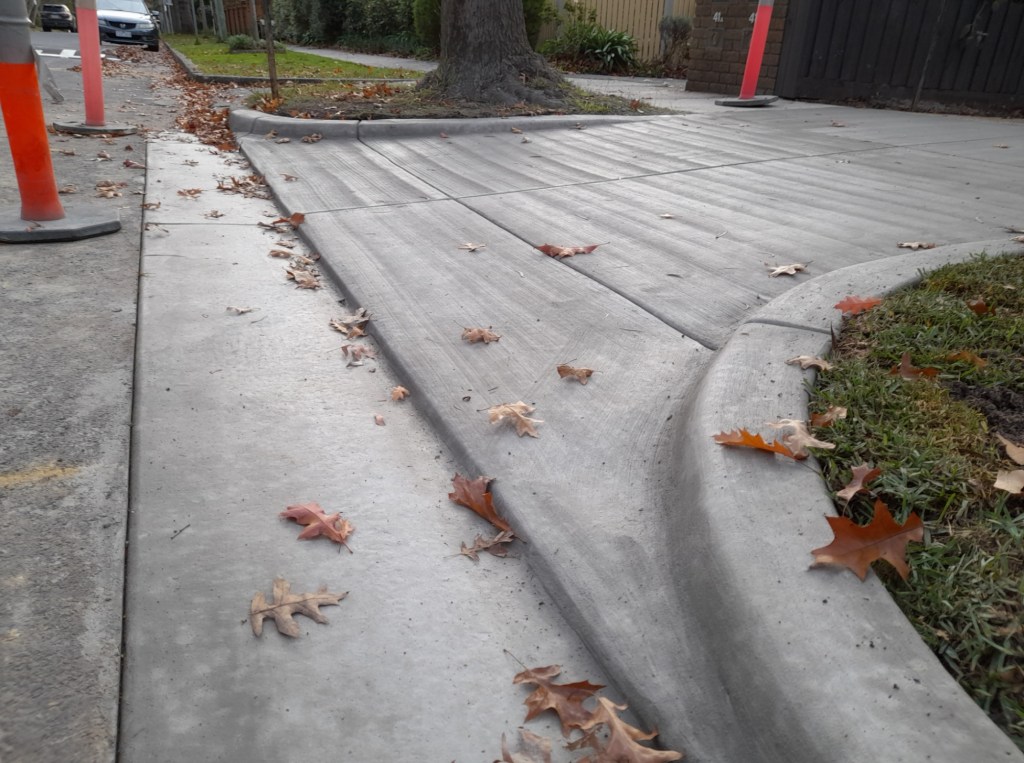
Over the last few years the Council has changed its design for the ramps from footpaths down to the road so they are smooth and without the dangerous lip that can trip up those less nimble on their feet, or can make a wheelchair very unsteady or even tip over. It’s been a very positive move.
The problem is that this message didn’t get through to the section of Council that issues permits and drawings for private driveway crossovers, and they are still being built with a lip like the one shown.
Until now that is!
It can be reported that a request has been circulated through Council departments asking that the drawing standards relating to driveway crossover design be changed.
So it’s no more lip from Council in Whitehorse, at least as far as driveways are concerned. Well done Whitehorse.
If you have cause to complain to Council, it’s recommended that you take the ‘lip’ out of it too and be nice. They are just doing their job.
Whitehorse Council encourages people to use Snap Send Solve to send reports about hazardous or other reportable situations encountered while walking or riding. Refer to the Council website.
In most cases it usually does lead to a good result. And not only for Whitehorse Council.
Justine McIntyre says: “I had the opportunity to study free public transit in depth for an economics project at HEC. Although my colleagues and I were initially favourably biased towards free transit, our study led us to conclude against it. Here’s why.”
This was in response to a post advocating free services:
“More people would use public transit if it was free, and it would be a major financial relief for the poorest among us. The environmental impact would be considerable as well, which is what should be motivating us more than anything.” @TaylorNoakes
Modal transfer. Based on research from cities where free public transit was implemented, modal transfer is often quite low for drivers (20%) and higher for active transit users, like pedestrians and cyclists, many of whom are already occasional transit users.
Problem misidentification. In fact, the obstacles to transit most mentioned by transit users or would-be users is not cost, rather: crowding, lack of frequency, and service interruptions. All of which risk being exacerbated by free transit.
Social receptivity to taxation. The money to fund transit has to come from somewhere. Residents are extremely reticent (= they hate) being stuck with a new “transit tax” whereas transit users are already in the habit of paying to ride, as long as the cost remains reasonable.
Rebound effect. In the short term, there may be a rush to “try out” free transit, creating temporary de-congestion on roads. Perversely, this could create an incentive for drivers to get back in their cars.
In conclusion: Yes, we need to get more people taking public transit. Making it free isn’t the way to do it. Making it efficient, frequent, accessible, safe and clean is.
But where Justine and I agree with @TaylorNoakes, and appreciate his article on this topic, is that we’re going to need to be a LOT more ambitious, and start seriously considering ideas that up until now have been considered too risky / marginal.
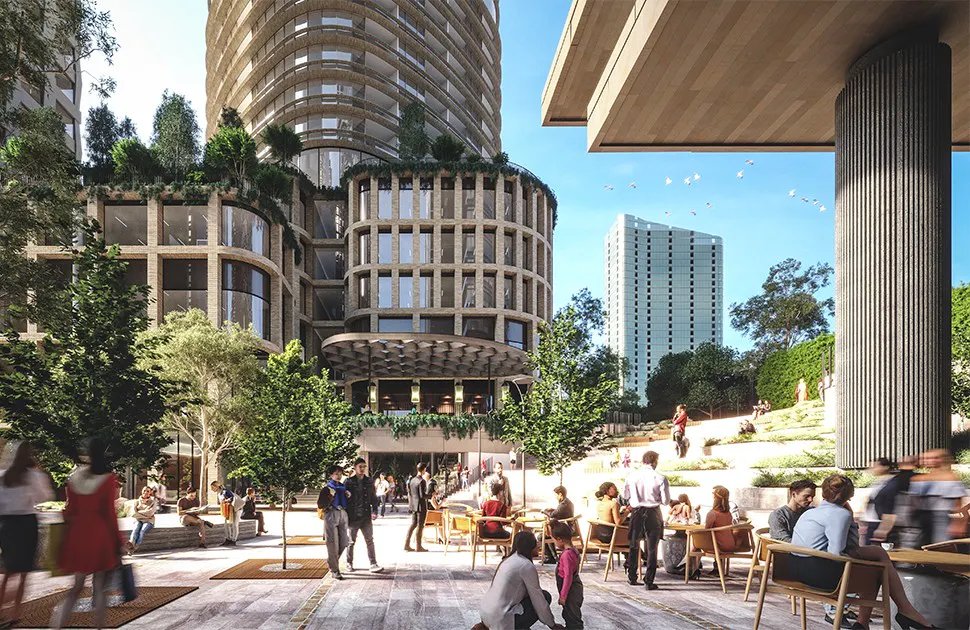
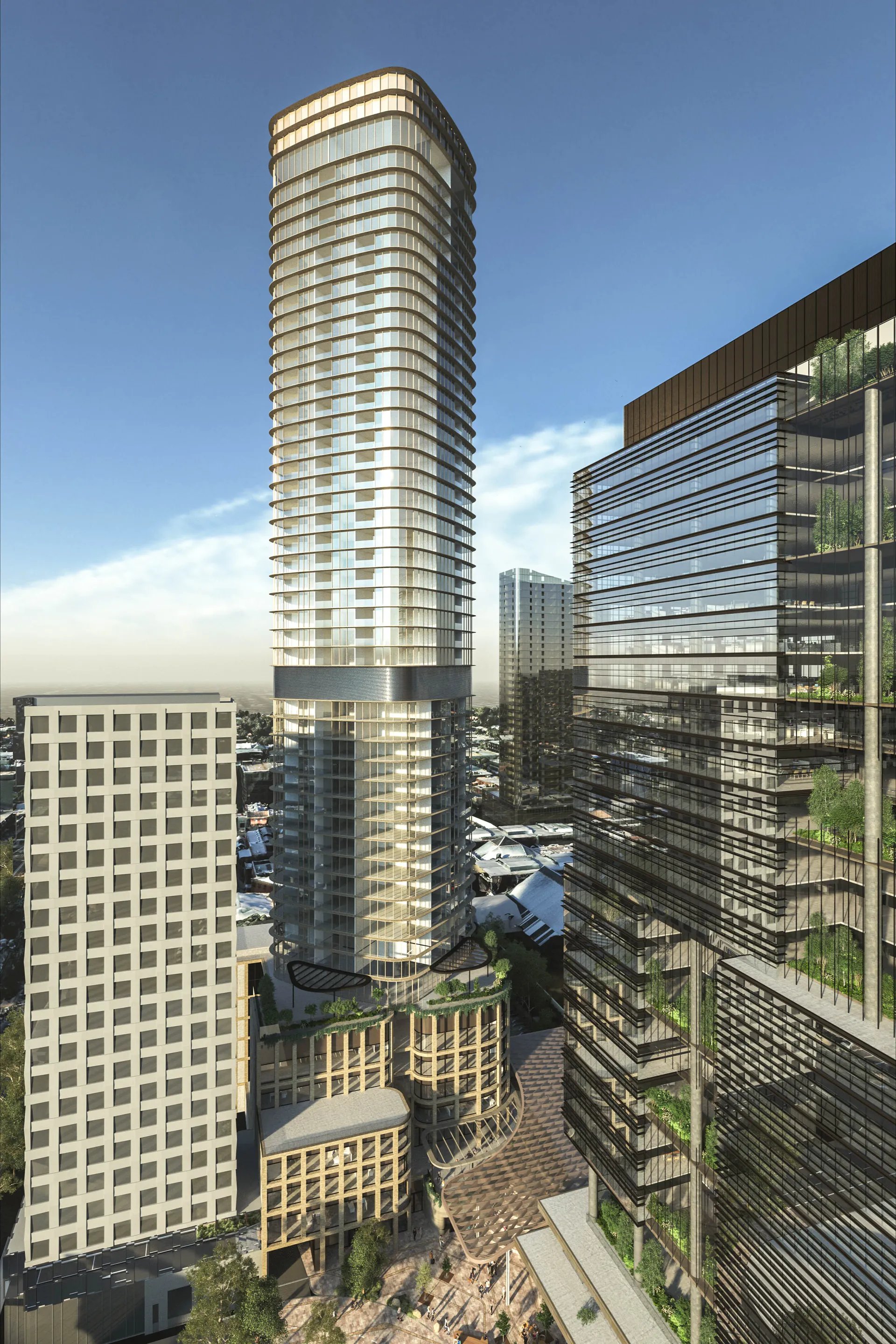
In the context of a major Metropolitan Activity Centre (MAC), is a 51 story residential tower or a 28 story commercial building to be built by Vicinity Centres in Box Hill, Melbourne really surprising?
With the confluence at Box Hill of train, tram, bus, the Suburban Rail Loop (SRL), and a major shopping and restaurant precinct outside their doors, what better place to concentrate city dwellers?
Local authority Whitehorse Council recently granted permits for Vicinity’s big-tower development. The vote was only 7:4 in favour – a close call. Those against were mainly worried by the height – the visual impact from nearby leafy suburbs like Mont Albert – and the less-than-normal car parking allowance.
Image credit: Vicinity Centres – Artist Impression
The choice is not whether Box Hill becomes an MAC – it’s well and truly on its way – but whether it’s a well designed, interesting and desirable place to live and work, a CBD with a rosy future.
Successful cites in the world these days are being built and rebuilt around accommodating the needs and desires of people on the ground, not around accommodating the needs of cars – think Paris, Barcelona or New York where the attraction is the ‘vibe’ of the big city, not being stuck in traffic.
I can hear to doubters now: “But Box Hill is not like those places!”
Of course it’s not, but it could be its own version of a really desirable CBD. It’s only the imaginations of the folk in diverse cities like York (UK), Oslo, Helsinki, New York, Amsterdam, Barcelona and a great many others that has led to them banning or radically reducing car use.
So it’s unfortunate that building height, and lack of car parks dominated the discussion, rather than pushing for better people-centred access into and through the Box Hill MAC at ground level.
It’s been several years now since Whitehorse City started to develop a new Structure Plan for Box Hill to ensure that the future the developers are giving the city is one that the residents actually want. There have been plans, hearings, and forums of interested people with a vision for the MAC and for transport integration. But still there is no framework. It’s well and truly overdue.
It’s within this context that it’s very disappointing that of the conditions placed on Vicinity’s plans there was nothing to ensure the maintenance of an effective north-south active transport route through the CBD and over the railway line. The only safe existing link will soon be cut off by Vicinity’s imminent development, leaving adjacent highways – Station St and Elgar Rd – as the only options to use. Suicide potential for experienced riders, let alone a young person wanting to get by bike to major Box Hill swimming and sports precinct south of the rail line. Academics tell us we have a big deficit in the amount of physical activity undertaken by all, and especially our youth. Let’s make it easier, not harder or impossible.
All the forums and meetings about the Box Hill of the future have universally agreed that an additional new bridge over the railway is essential for the active transport needs of the future. Vicinity agreed too and will, as part of this planning application, transfer a small parcel of land to the Council to enable this to be practically built at some future time. But the future is now coming quickly, and the bridge is not.
Pedestrians still have the option to traverse through the foodcourts and arcades of the station precinct and shopping centre to travel north-south. But that’s like demanding that in the City of Melbourne all north-south foot traffic must go through the many arcades and food courts, and banning the use of pedestrianised Swanston and Elizabeth streets. Possible but totally impractical and undesirable.
At a time when the Box Hill MAC should be being regarded as a blank canvas upon which to creatively build a city for the future, have we let our visions be clouded by how we perceive the past? Have we let the inertia of bureaucracy lead to the mundane, and to locking-in of the unattainable?
Add the uncertainties of the SRL development and its effects plus the lack of direction and planning by the State Government about the Box Hill station itself, about a bus interchange that meets the community need, or shared, safe and desirable active transport links towards Blackburn and Mont Albert.
It makes all the Government talk about 15 or 20 minute cities sound hollow.
Planning for the next stage of Vicinity’s development over the station and across to Carrington Rd is imminent. Let’s make sure that an arcade-type-shopping-mall-foodcourt route is not foist upon the through-traffic pedestrians, and those using transport aids – even low speed bikes. People of Box Hill deserve much better vision than that.
And here’s a way to speed up delivery of that universally agreed bridge. SRL plans to eventually make the existing south lanes of nearby divided Whitehorse Rd into a vibrant pedestrian, cycling and open mall area. It’s a brilliant and visionary idea. And it will make an east-to-west active transport route via Box Hill MAC possible by utilising the proposed new bridge if it ever gets built.
Let’s turn “eventually” into a “do-it as a first priority” of the SRL project.
A commitment by the Victorian State Government to build that bridge now, rather than in some uncertain future, will show their true colours.
Whitehorse is on the Traditional lands of the Wurundjeri people. We acknowledge them as Traditional Owners and respect their Elders for the way they cared for the land in our area for millennia.
Like to know when our periodically published Active Transport News is is available? Click the Subscribe button below.
Join 2,520 other subscribers
NOTE: To receive our periodical NEWSLETTERS, please click the 'Subscribe' at top of page.
Registered Charity
WATAG is registered as a charity with the Australian Charities and Not-for-profits Commission ABN 63 938 570 447.
Being registered as a charity with the ACNC demonstrates WATAG’s commitment to transparency and good governance.
Search
We try to be spam free. We use Akismet spam blocker.




 Whitehorse Active Transport Action Group Inc.