The choices we make
We build aggressive vehicles
We market them recklessly
We celebrate dangerous driving
We design violent streets
We prioritize the driver at all costs
We shame and blame everyone else.
Road violence is no accident it’s a direct result of our choices.
What are your thoughts? Click here to comment on this.
Contents
- The choices we make
- We all want more of a good thing
- Chips with that?
- Can you expect 30km/h streets anytime soon?
- More about 30km/h
- Encouraging walking and cycling isn’t hard
- The radical activist?
- Choices we make (2)
- We asked this question last time
- Out of the mouths of babes
- Walking to school mythbusters
- Better Streets
- Do YOU think this crossing point is safe?
- Choices we make (3)
- Some steps are missing
- Eastsider News – not to be missed
- Two TOP resources
- Interested in being Active too? Here’s how
- Some questions for YOU
- Your view
We all want more of a good thing

We really value the fact that we have LOTS of newsletter subscribers.
But we want more- MORE Members!
We’d love YOU to show you love US and really want to help us – and the community too – by becoming a Member
Annual Membership is due NOW.
It’s only about 20c/week – ie $10/year. Pretty reasonable eh?
We’d love you to give it a go! Just Click here to check it out.
Or if you are new to this Newsletter, click the Subscribe button in the right column to be sure you get future editions approx. every two months, and think about joining as a Member too.
If you’re already a Member, and you haven’t paid your renewal invoice sent recently, please check back on your emails to find it. We’d love to finalise all outstanding Memberships for 2023 – 2024.
Click here to comment on this.
Chips with that?
Here’s a relatively new term you might not have come across: Vehicle-to-everything (V2X). It refers to the communication between a vehicle and any other entity that may affect, or may be affected by, the vehicle. Check this Wikipedia link for the full technical details. Phew!
The main motivations for V2X are said to be road safety, energy savings, traffic efficiency, and … mass surveillance!

A German bicycle manufacturer, is working on equipping its high-end e-bikes with proximity beacons to improve cyclist safety on the roads. The aim is to enable sensor-equipped vehicles to detect V2X-equipped bicycles, potentially preventing accidents.
Sounds good? There’s more to this than you think. Read more here
Click here to comment on this.
Can you expect 30km/h streets anytime soon?
We posed this question a couple of years ago. Has anything changed?
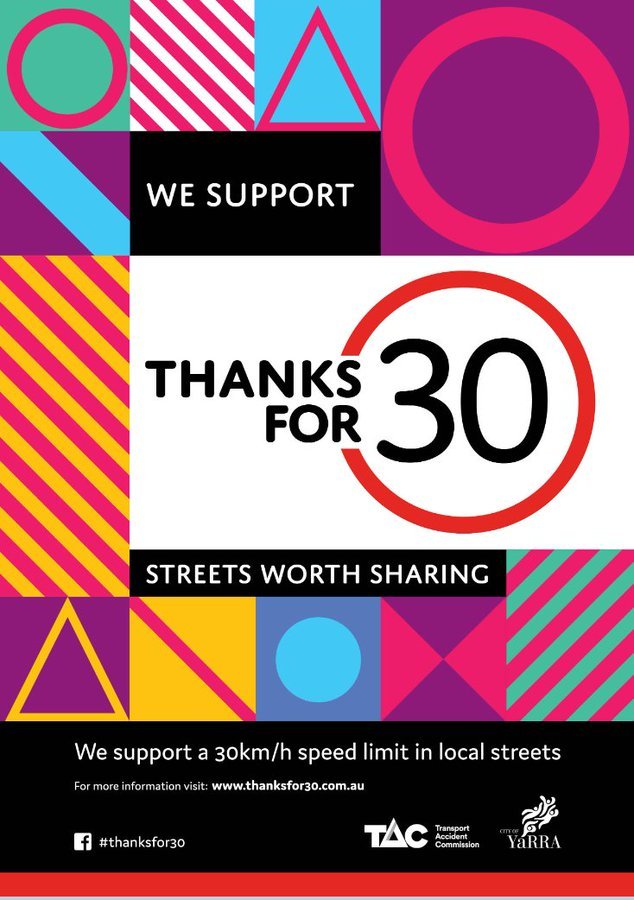
“We want to create streets that everyone can enjoy – whether they are walking, driving or riding. We want people to feel safer, which in turn will make them more likely to spend time in the streets.”
Yarra City Council
Research from around the world shows us that 30km/h is the safe speed for areas where there are pedestrians and cyclists. International examples and a growing body of evidence show us that lowering speed limits in these areas is the right route to take.
Road safety strategies from around the world, including Victoria’s own Road Safety Strategy – Towards Zero 2016-2026, recognise this.
Research shows that a fatal injury to a pedestrian is at least twice as likely to occur in a crash at 40km/h than at 30km/h.
Overall, if average speeds are reduced by just 1km/h, road crashes are reduced by 2-3%.
Research also shows that reduction in speed limits in urban areas has minimal impact on travel time. Travel time in built-up areas is related to how much time is spent slowing and stopping at intersections, parking and in local congestion. Maximum travel speed has very little to do with travel time in these areas.
30km/h (or 20mph) speed limits are working in cities and towns all over the world. It’s time to bring them to Australia.
Your thoughts? Click here
More about 30km/h
Attitudes and opinions are changing.
Local and national authorities are taking matters into their own hands.
City after city are implementing 30km/h as default.
- NSW speed limit guidelines now have official recommendations for 30km/h speed zones. Check this LinkedIn post from Lena Huda of 30please.org
- The Dutch lower House of Representatives voted for 30 km/h as the new standard (though still not mandatory).
- The Spanish Government decided to limit speeds to 30 in urban areas on all single lane roads.
- Helsinki implemented it a couple of years ago and Oslo increased it’s number of 30 kph zones, and the result? Not a single cyclist or pedestrian death in 2019!
- Whilst Spain adopts 30km/h for all single lane town roads Bilbao announced that it will have a 30 km/h limit across the entire city
- And Paris implemented 30km/hr in 2021
- Brussels has a 30 kph inside its petite ceinture, and became default 30 kph across the whole Brussels region from January 2021
- Munich has 80% of its roads at 30
- And Graz has been 30 since 1992!
AND…
Dublin is taking 30km/h VERY seriously with a very comprehensive community consultation program to ensure full acceptance. Check out this video – for those with a deep interest. It does run for 2 hours!
The European Cycling Federation recommends 30km/h as the default speed in urban areas.
Ministers from around the world adopted the “Stockholm Declaration” at a conference held in February 2020. It includes a commitment to 30km/h speed limits in any areas where vulnerable road users and vehicles mix. Read report here.
In September 2020, the General Assembly of the United Nations has called for “the strengthening of law enforcement to prevent speeding and mandate a maximum road travel speed of 30 km/h in areas where vulnerable road users and vehicles mix in a frequent and planned manner, except where strong evidence exists that higher speeds are safe” See report.
YET…
In Victoria the DoT (VicRoads) Traffic Engineering Manual does not list 30km/h as an allowable speed! Under the guidelines, 30 km/h speed limits are effectively not an option available to road managers without taking extraordinary steps to enable it.
A Parliamentary Inquiry into the Increase into Victoria’s road toll reported this. Check out section 4.4.1 – Urban speed limits (page 72-76)
It also noted that:
“Local government stakeholders in this Inquiry in favour of introducing 30 km/h speed zones told the Committee that the current procedures in place to achieve speed limit reductions were ‘cumbersome’ and ‘inefficient’,”
and:
“[Councils] suggest that government simplifies the process for local government to implement speed limit reductions on both local and arterial roads … This would be particularly applicable in neighbourhoods where walking trips form a large part of the mode share due to local services such as schools and community centres”
It concluded:
FINDING 13: Local councils involved in this Inquiry have found the application process to change speed limits in specific areas to be extremely difficult to navigate. They believe the application process should be streamlined.
WATAG totally endorses the local Council views, and asks that the Minister take action to review the speed options available. Also needed are changes to the Road Management Act to delegate appropriate authorities to local Councils. This will make it easier for Councils to try out, and implement speed changes appropriate for their local suburban streets.
Like to comment? Click here
Encouraging walking and cycling isn’t hard
The Conversation gives three tried and tested methods
This Conversation article is written about the UK, but the three methods suggested are totally applicable here in Australia.
- 20-minute neighbourhoods
- School street closures
- Scale up plans into city-wide schemes
The Conversation article specifically talks about two 20 minute neighbourhoods in UK.
Orford Rd Walthamstowe was part of a “Mini Holland” program to make the streets safer to walk and ride and to reduce pollution – plus many other benefits.


The street used to have 7000 vehicles per day. The before and after photos above show the difference after the plan was implemented.
There were many protests about the traffic restrictions when they were first implemented. Now it looks like the kind of picturesque street we’d all love to have in our area. See photo on left.
It’s not surprising that a longitudinal survey done in the following years showed that less than 2% of residents would get rid of it.
On a similar note, the Islington Council in London, wanted to make St Peter’s Streets more ‘people friendly’. They introduced measures to be trialed over 18 months. You can read about the details here:
It is interesting to read some of the comments posted when the changes were first introduced – a divergent set of views. Some loved the changes and many hated them because they were a bit inconvenient for them personally. But, importantly, Islington Council kept track of progress and provided a monitoring report after 6 months. It’s very positive and shows that Councils must lead the community, and seriously try things out. Then give them time to “settle in” adapt and get used to the changes. You can read the report here.
Another local Conversation article asks the question: “People love the idea of 20-minute neighbourhoods. So why isn’t it top of the agenda?”
In fact Plan Melbourne 2017–2050 – the Victorian Government’s long-term plan to ensure Melbourne remains liveable, sustainable and accessible to people of all ages and abilities – is guided by the principle of 20-minute neighbourhoods, liveable places where people can access most of their daily needs locally without needing a car.
It’s excellent that the Whitehorse 2040 Vision prepared by a Community Panel, included as a Key priority for the Movement & Public Space theme:
“Create low-traffic neighbourhoods where people can move safely. We should aim to create 20-minute neighbourhoods”
You can read about the Whitehorse 2040 Vision here
Like to comment? Click here
The radical activist?
Your thoughts? Click here
Choices we make (2)
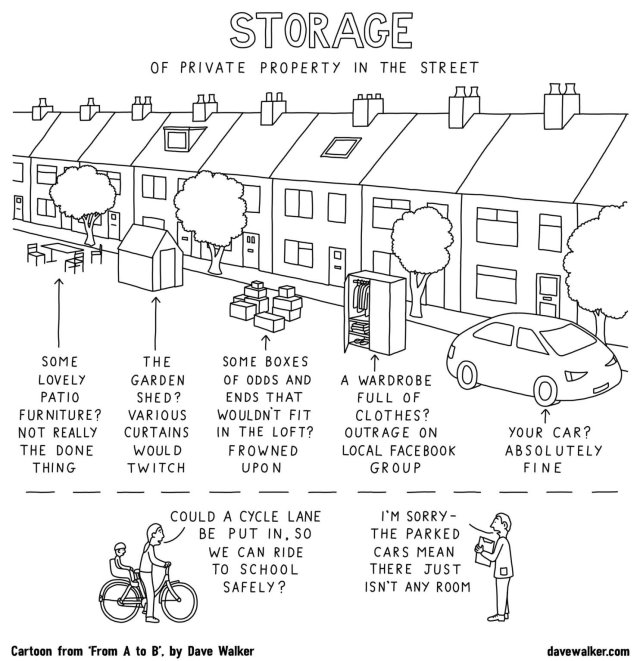
What is your view? Click here
We asked this question last time
How many times does one need to ask this question? When will someone from local Councils or the State Government give an answer?
See below for the kinds of answers they DO give about an unsafe road crossing.
More info? Refer to https://www.betterstreets.info/blog
What are your thoughts? Click here to comment on this.
Out of the mouths of babes
Walking to school mythbusters
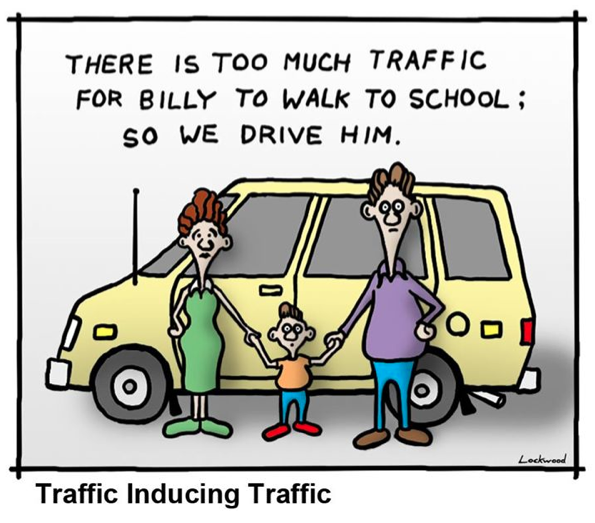
There is plenty of internationally recognised research to back up the above with conclusions like this:
“To increase AT (Active Transport) to school it is worth investing in infrastructure designed to improve walkability around schools, coupled with campaigns that target whole households to promote
Ref: Carver et al, Journal of Transport and Health 12 (2019) 115-129
age-appropriate independent mobility rather than adult accompaniment, which tends to involve
children being driven.“
PLUS these significant papers all with the same conclusions.
- Children’s independent mobility – is it influenced by parents’ perceptions of safety?
- Bicycles gathering dust rather than raising dust
- Independent mobility among urban and rural dwelling Australian children
- Parental chauffeurs: what drives their transport choice?
- Neighbourhood safety and children’s physical activity
- Walking, riding or driving to school: what influences parent’s decisions?
- and many, many more!!!
Click here to comment on this.
Better Streets
WATAG was very pleased to join with the Better Streets coalition of community groups, businesses and individuals, advocating for better streets in Australia.
Here’s the Better Streets Vision
(A perfect ‘fit’ for WATAG!)
We’re calling for safe, healthy, people-friendly, climate-friendly streets that are accessible to all of us, to give people more options to move around safely and enjoyably.
- Safe streets – with safe space to walk, cycle and cross on busy roads and quiet, low-traffic streets in neighbourhoods
- Healthy streets – where walking, wheeling, or riding is the natural choice for short journeys, children can play, get physical, and move easily outdoors and infrastructure is provided equitably
- People-friendly streets – with lots of plants and seating, and where motor traffic doesn’t dominate – especially in town centres
- Climate-friendly streets – that promotes the growth of zero-carbon shared mobility options so that all residents have suitable, sustainable, transport choices on their doorsteps.
You might like to join the Better Streets Movement too. Click here.
Click here to have your say about this.
Do YOU think this crossing point is safe?
Last time we reported that is is six months since we started a petition to Whitehorse Council to work with the Victorian Department of Transport (now Department of Transport and Planning – DPT) to make it safe for people to cross Blackburn Rd at two key places.
It’s now NINE months. Back then we noted that:
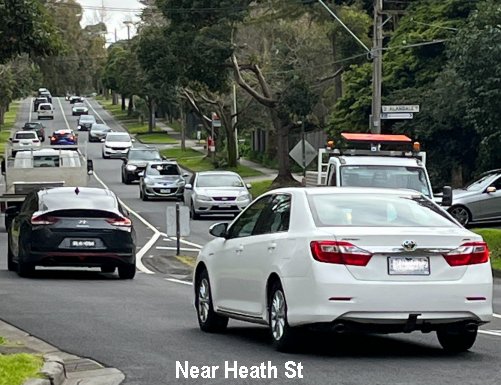
“This section of State Highway in suburban Melbourne is 1.4km without a safe crossing. This forces parents with young children, elderly people, walkers and cyclists to cross the road at midway points without guidance. No other State Highways in this region have such an extended distance between safe crossing points.”
https://watag.org/2022/09/18/crossing-blackburn-rd-should-be-safe/
The community agreed and 734 people registered their support. Check here for the report from last time with all the details.
What conclusions can be drawn from the responses from Council and the DPT?
Here’s what local politicians think.
Because there are no records of deaths or serious injury at these locations, they are considered by the DPT to be safe.
Would the bureaucrats, traffic engineers, Councillors and Politicians let their own children, grand children or elderly parents using mobility devices cross at these points un-accompanied?
That’s a much more realistic measure of whether it’s safe for the rest of the community.
If you are concerned about this delay, why not contact your MPs, and local Council now?
- Paul Hamer MP – Box Hill MP, Victoria
- Will Fowles MP – Ringwood MP, Victoria
- Matthew Bach MP – North Eastern Metropolitan MP, Victoria
- Shaun Leane MP – North Eastern Metropolitan
- Hon Melissa Horne MP – Minister for Roads and Road Safety, Victoria
- The Hon. Daniel Andrews MP – Premier of Victoria
- Simon McMillan – CEO Whitehorse City Council
- Jeff Green – Whitehorse Director City Development.
Click here if you’d like to comment on this.
Choices we make (3)

Your thoughts? Click here
Some steps are missing
We’d love to report that as a “Good News” headline!
But sadly, we can’t.
In April 2022 we reported “Fix needed for Spotlight access from Gardiners Creek Trail” (check it out).
Due to there being steep steps stopping access for bike users, mums with prams, the disabled and elderly, a WATAG Member suffered suffered a serious injury caused by being hit by a car when she was forced to take a much longer detour route to her destination.
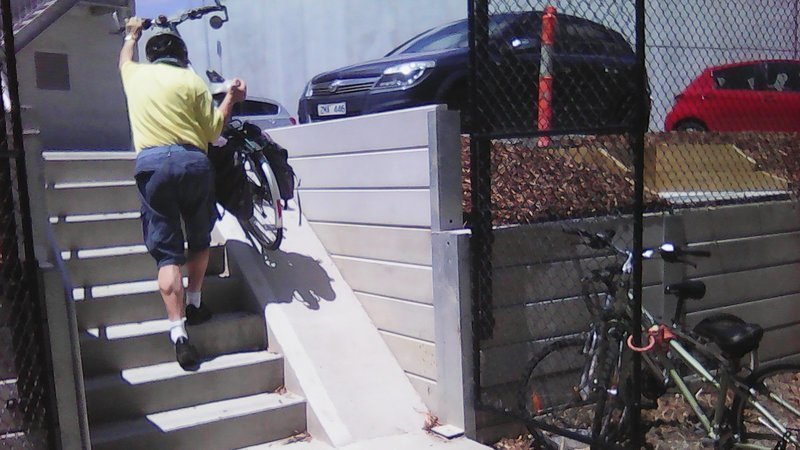
We sent a petition to Whitehorse Council signed by 239 people.
Pleasingly we reported in August 2022 “that Council has followed through with this, and has made Spotlight aware of the problem. We hope to be able to report next time that they have come to an agreement about implementing a solution which solves this problem.”
Along with the rest of the community, we’ve been patiently waiting (with a little bit of prompting to Whitehorse Council).
SADLY another year has passed and we can’t use the headline above.
If you think that kind of delay is unreasonable (we do!) perhaps you can help by emailing:
- Simon McMillan – CEO Whitehorse City Council
- Jeff Green – Whitehorse Director City Development.
- Your local Whitehorse Councillor – check the list here.
Your thoughts? Click here
Eastsider News – not to be missed
Click here to subscribe to get Eastsider News delivered to your inbox every two months. Its FREE!

Click here to comment on this.
Two TOP resources

Bicycle Network’s’ Newsroom where you’ll find great articles like this one from a study published in The Journal of Physiology.
” Six minutes of vigorous bike riding boosts the brain” and up-to-date cycling related news too about campaigns they are running.

Victoria Walks has terrific information about the benefits of walking, research, urban planning, road management, behaviour change, walking route resources including maps etc. for Victoria – urban and rural. And much more. Check it out.
Click here to have your say.
Interested in being Active too? Here’s how
Join as a WATAG Member and help the whole community to be active.
See above
Join a local group that enables you to be active and social too!
- Like walking (and some bike riding too)?

2. Or is regular bike riding your idea of fun?

Whitehorse cyclists
We are a happy group of men and women who love the outdoors, enjoy riding bicycles and thrive in other people’s company.
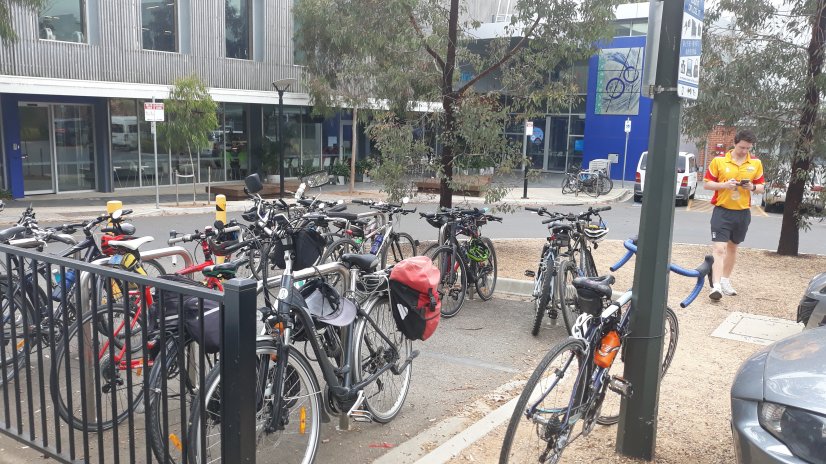
Bike parking is easy for morning tea time at Aqualink Box Hill during a Whitehorse Cyclist’s Easy Tuesday ride.
Around 25 riders getting fitter and enjoying the company of friends.
Good for local business too by putting money back into the local community.
Some questions for YOU
- If you HAVEN’T received these newsletters regularly every two months, this question is for YOU.
Did you enjoy THIS newsletter, and would you like to read future newsletters every two months?
Just click the button below.

Your view
Tell us what you think about articles in the newsletter in the “Leave a Reply” box below.


 Whitehorse Active Transport Action Group Inc.
Haven’t seen an article on the full Easy Ride Network for quite a while. There’s 18 routes but it looks very likely that CoW will stop implementing them.. (Certainly explicit with the suggestion from the O’Brien Traffic that the low stress proposal of separated lanes in NS02 would be staged, with the last section going in around completion of SRLA Box Hill in 2035)
The only thing that Ive seen was a reference to the Community Rides with Chris Hui and Vaughan Allan, re 2 new routes.
Why not talk about the why a full network of Easy Ride Routes is required, as distinct from a 30% network that we look like ending up with (It is spelt out very clearly in research referred to in CoW Bike Strategy and the Victorian Bicycle Strategy – eg Mekuria and Furth) It boils down to: a ‘network of low stress, direct and continuous routes ‘ How does 6 incomplete Priority ER Routes compare to the Arterial road network (it’s less than a third) And remember research says that a cyclist will not choose cycling as his/her transport mode if the ‘safe’ route involves a detour of 25% or more! (it’s a pretty basic aspect of transport planning)
LikeLike
What is the advantage of ERR? They are no different from normal streets except they have some bicycles painted over them. No lower speed limits, no separate bike lanes, no restricted parking. How do they make any cyclist feel safe? I can only imagine two reasons Council would put them in:
1. To pretend we have special facilities for cyclists, e.g. x km of cycling lanes.
2. To argue that cyclists don’t use them, so we don’t actually need cycling space.
LikeLike
Many people have views about the ERR’s and have filled in the survey linked in the December newsletter.
It’s still not too late to add views.
Results of the survey in next newsletter.
LikeLike
Many of the streets (Road reserves) in Whitehorse are wide, have ample footpaths on both sides complete with green nature strips, the actual roadway is wide enough for cars to park on each side and still have sufficient room for cars and even trucks to pass in opposite directions. Apart from from school location limits during school times I see no reason to reduce speed limits in these wider roads. I also support cyclists being permitted to use footpaths anywhere with a speed limit of 10 KPH (that is just a little quicker than walking speed). I accept 30KPH as appropriate for the narrow roads where most houses have a double garage and some driveway, yet street parking is still a problem and it is illegal to park on the nature strip!
Leith Forbes
Vermont South
LikeLike
Thanks Leith. It’s good that people are thinking more about how to safely share streets and have speed limits to suit the circumstances.
LikeLike
The first child does not have her helmet on properly or safely.
Reply: Thanks for the comment. Helmets should be worn correctly but this one looks fine to me!
Some would say that blaming the helmet fit or even the child if an accident occurs is contributing to the community-wide tendency to victim-blame. This is the whole point if the video – as a society we are making choices which totally weigh the odds against vulnerable people.
LikeLike
BS. Pedestrians would be a lot safer if they got off their phones and looked where they were going.
Are you recommending that cyclist reduce their speed to 30km/h too?
What about the elderly, walking long distances with shopping not so easy, or those with disabilities, mothers struggling to get to work on time, or others with mobility disabilities.
I’m a cyclist but this 30km/h if fine for the lucky few with lots of time on their hands. Accidents happen too because low speeds lead to distracted drivers. There’s no distracted driver on the autobahn and few accidents too.
Reply: All road users should act responsibly – pedestrians and cyclists. So wearing headphones (which is also common for cyclists) and not watching out should be discouraged.
A considered read of the articles on 30km/hr would inform that the research is completely unanimous that from the UN down, through a great many countries and major cities, that 30 km is best for all. And the possible time saving of a second or two is totally outweighed by the cost to the community in $ and saving of life and limb.
Sorry to say that your personal observations about this are not in accord with the evidence.
LikeLike