Click here to read the WATAG May/June 2020 newsletter
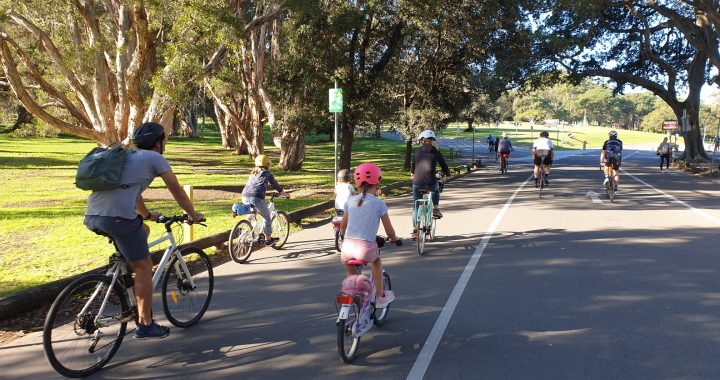
Nathan enjoys his bike very much!
Nathan lives in Blackburn and loves his bike. It enables him to enjoy the open air in a different way to being in a wheelchair. His mother Vivien helps him manage the bike safely. His family bought it in Adelaide six years ago, so its been able to be adjusted to suit him over that time. Vivien takes him in a wheelchair at other times.
Berlin is quickly revamping its streets amid the coronavirus crisis in hopes of creating more and safer spaces for cyclists and pedestrians. But Germany is a car country, and [as in Australia] not everyone is happy.
Berlin Roads and Parks Department official Felix Weisbrich says: “My job is to protect people. And that is what I am doing”
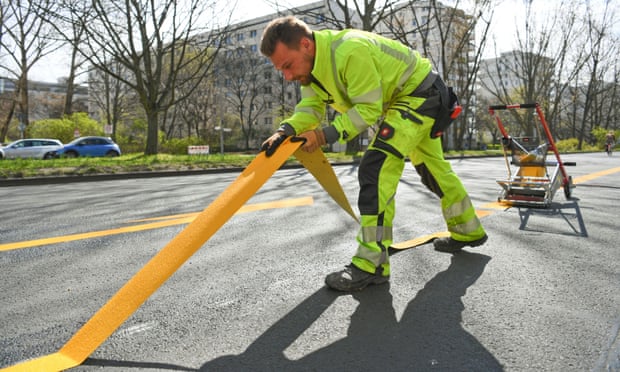
“You, as a cyclist, should be well protected during this pandemic. When you pass other bikers you need to be at least one-and-a-half-meters (5 feet) away from them,” says Felix Weisbrich as he points to a yellow line marking a new bike lane that is a full meter wider than before. Weisbrich heads the Roads and Parks Department in Berlin’s Friedrichshain-Kreuzberg neighborhood.
Weisbrich has been taking road space away from automobile drivers and giving it to bicyclists since the new COVID-19 coronavirus pandemic began. He widens bike lanes where necessary and commissions new ones on roads that previously had none — no wonder he is the cycling community’s new hero.
But Weisbrich says this is not about him: “The main idea is to give those fighting the pandemic on the front line a safe way to get to work. One that reduces their risk of getting infected.” He says it will allow doctors, nurses and even journalists to commute quickly and safely, making rail and underground networks less full.
Article selected from D W Germany. Click to read more.
A worker lays a temporary cycle lane on a main road in Berlin. Photograph: Annegret Hilse/Reuters
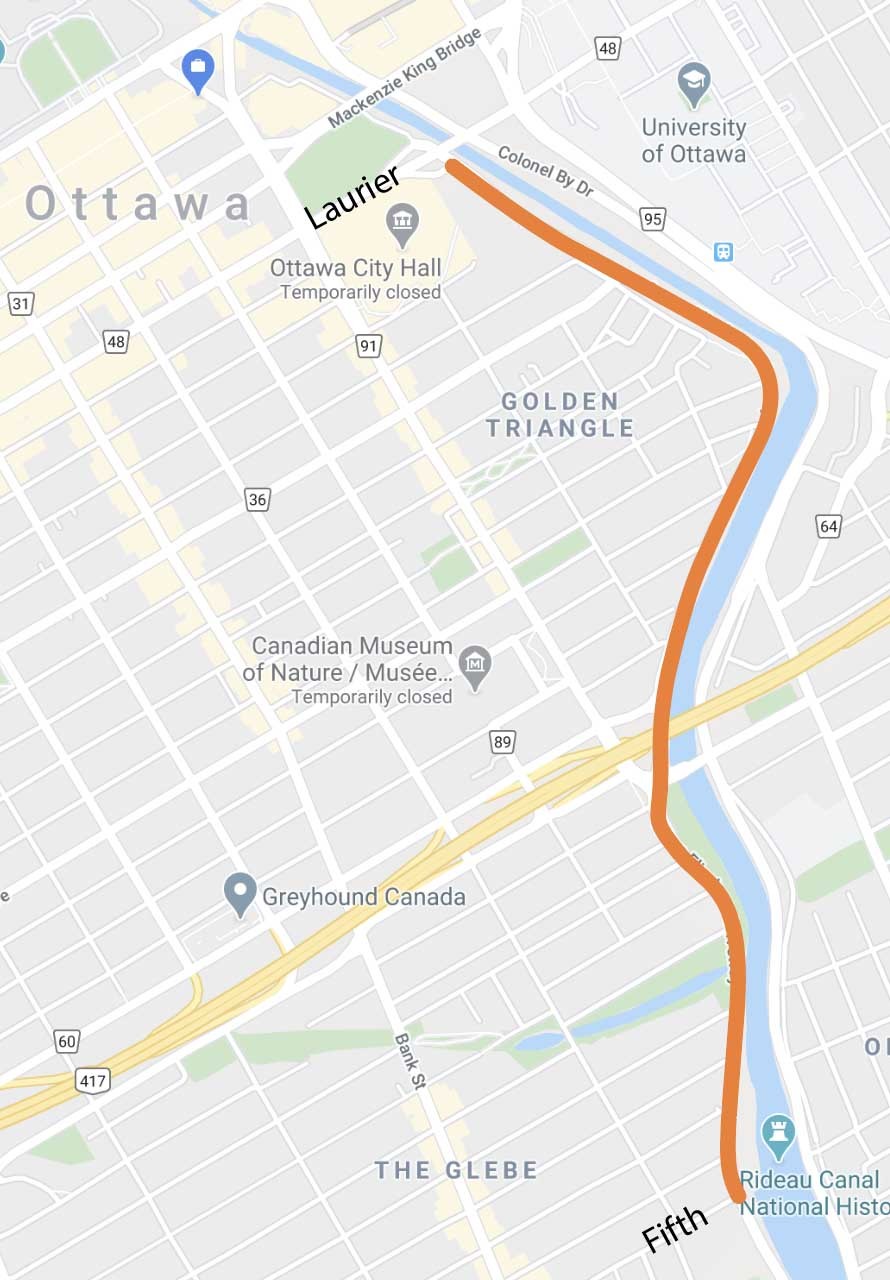
Temporary Closure of Queen Elizabeth Driveway to motor vehicle traffic. The National Capital Commission (NCC) is undertaking a pilot project to close the Queen Elizabeth Driveway to motor vehicle traffic, daily from 8 am to 8 pm, from Saturday, April 18, 2020, to Sunday, April 26, 2020.
The action in Ottawa is equivalent to closing Alexander Parade in Melbourne during daytime hours for Active Transport during Covid 19.
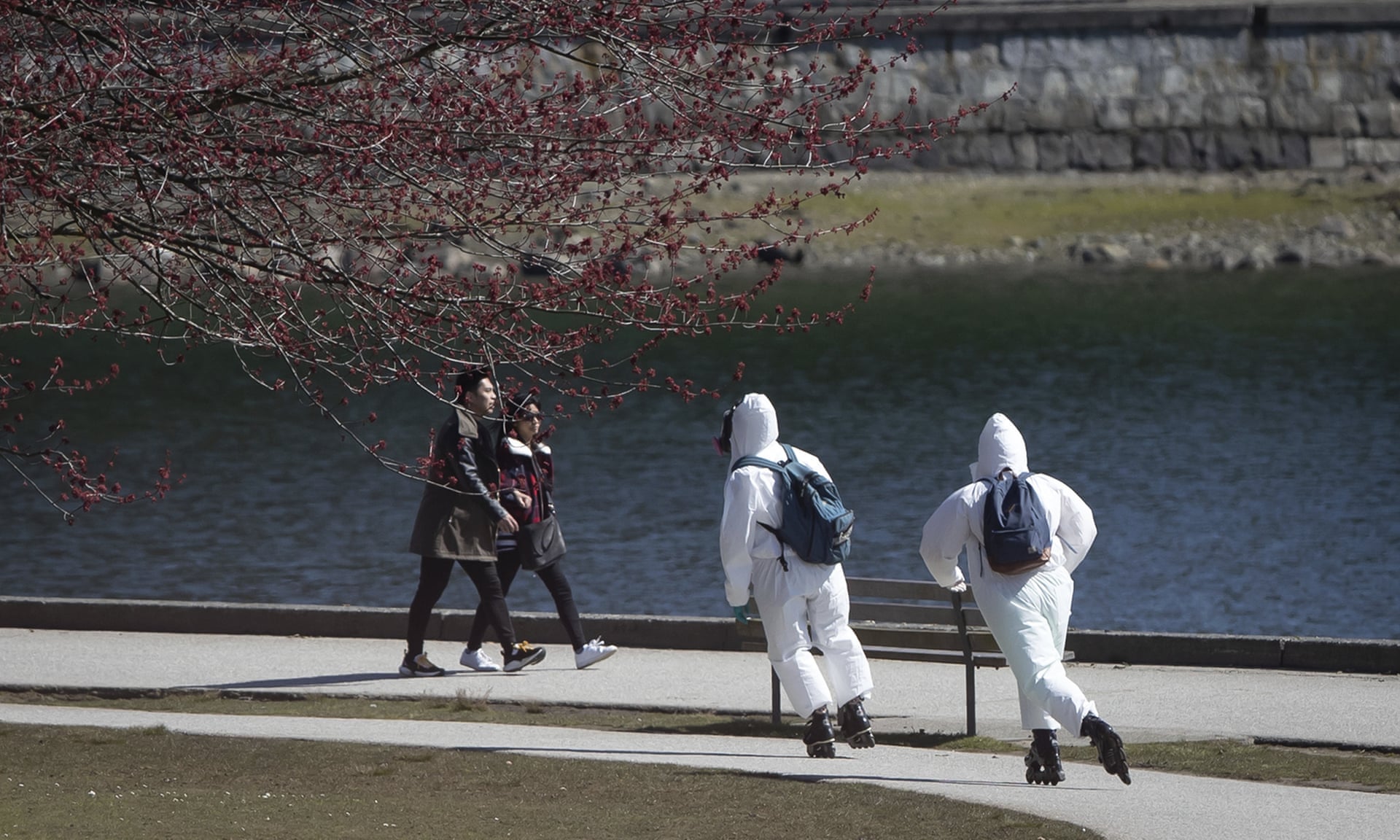
Skaters wearing personal protective equipment on the seawall at Stanley Park in Vancouver. Photograph: Darryl Dyck/AP
Philadelphia, Minneapolis, Denver, Oakland and more…
In Philadelphia officials closed 4.7 miles of Martin Luther King Jr Drive, a wide riverside boulevard, to motor traffic on 20 March following an 1,100-strong petition, as leisure trails became overwhelmed by residents seeking their daily exercise.
Minneapolis has closed part of its riverfront parkways to motor vehicles. Denver has introduced pop-up cycling and walking lanes on 16th and 11th Avenues and roads around Sloan Lake to help people socially distance while exercising. On Thursday, Oakland officials said they were planning to close 74 miles of roads – 10% of the city’s total – to motor vehicles.
Bogota
The Colombian capital of Bogotá is opening 76km (47 miles) of temporary bike lanes to reduce crowding on public transport and help prevent the spread of coronavirus (Covid-19), as well as to improve air quality. This will expand the 550km (340 miles) of existing permanent bike lanes.
22km (13 miles) of the new lanes were converted OVERNIGHT to open on 17 March by reconfiguring car lanes.
Budapest
Like many cities, Budapest has seen a drop in bus use by almost 90%, with a 50% decrease in road traffic. City officials have now planned a cycling network on main roads.
Mexico City
In late March the bicycle mayor of Mexico City proposed 130km of temporary bike lanes. In the meantime, a 1.7km temporary lane, running 8am-7pm, has been installed on a major thoroughfare.
Temporary lanes (green) proposed to facilitate cycling in Mexico City (image courtesy of Areli Carreón)
Bicycle Network: Swap our streets for cycleways to keep people riding
Bicycle Network is asking governments to turn roads into cycleways to ease the load on busy bike paths and make sure people can maintain physical distancing while exercising during coronavirus restrictions.
Yesterday, a two-hour count of shared paths in Melbourne tallied thousands of riders, runners and walkers, with some paths recording large increases when compared with pre-coronavirus counts.
Bicycle Network CEO Craig Richards said that we need to create more space for the thousands of people that are looking stay active and use our paths and streets.
“Coronavirus restrictions have shown that we need to start thinking differently about daily life. Instead of driving to the gym or taking the kids to basketball, suddenly thousands of people have pulled the bikes out of the shed and are exercising near home,” said Mr Richards.
“Australia should follow the lead of other countries and quickly create more space to ride separated from vehicles. More space will enable people to get out of the house and get some exercise while still maintaining their physical distancing.”
On Twitter we posted: ·@DanielAndrewsMP@JaalaPulford@JacintaAllanMP@VicGovDoT You are taking notice of the doctors on #COVID19 actions. Well done! Don’t forget to follow the their advice with this important Covid advice too. And check out all the actions of the other cities around the world that we have noted above, and do your Government’s best to implement the same actions.
A group of Australian doctors & public health/transport academics & organisations is drafting a letter calling on decision makers to take emergency steps to enhance walking & cycling during the COVID-19 pandemic
We’ve actively posted many more requests to the Government to address this matter.
Please Daniel Andrews – take action NOW.
Disclaimer: we urge all people to respect government guidelines on movement, and take into consideration all risks to their fullest extent. If exhibiting any signs of the coronavirus, we do not encourage the use of the bicycle and ask you to please stay at home and seek medical assistance if needed.
Read this article from The Conversation (19 Feb 2020) and think about the issues as they affect us in Australia, and in particular in Melbourne and Whitehorse. (Think Box Hill)
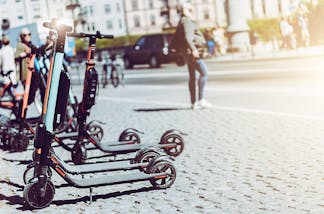
A City of Whitehorse Councillor has already been contacted by Beam, an electric scooter company who would like to run a pilot program so that Council to test the market.
Refer also to this article extract published by Bicycle Network last year, for another viewpoint.
Please note that, as far as WATAG is aware, Council has NOT considered this request from Beam yet, and has NOT developed a public response to this request.
WATAG would be interested in YOUR views so we can start a conversation.
Read the latest “Active Whitehorse News”click here
Breaking News A Carowner Virus remedy rediscovered.
A 150+ year old remedy for the Carowner virus has recently been rediscovered.
It’s been shown to be very effective when used by many in the community. PLUS read about walking and why it’s good, WOONERFs, trackless trams … and all about life after covid19. Check it out at www.watag.org
Senior Precinct Access Planner at Suburban Rail Loop Authority
In the current Coronavirus situation, there have been numerous articles about changing streets to make them safer, such reducing speed limits and reallocating road space and how to create healthier neighbourhoods. Are you also reflecting on what trips mean as a ‘purpose’ or experience at the moment and wondering if more people are taking walks and rides, realising that streets are places for community to interact and find happiness?Will more people realise that walking/running and cycling for transport are easy, enjoyable ways to fit physical activity in their day? Could this be a change moment and how do we realise some good out of this all?
Paul Tranter, at the Australian Walking and Cycling Conference in Adelaide last year, gave a very thought-provoking presentation about how we might be more effective by going slowly [Rodney Tolley’s and his book, Slow Cities- Conquering our Speed Addiction for Health and Sustainability is expected out in June and their ‘manifesto’ is here]. One of his lines, ‘playful mobility is not taken seriously enough’ resonates even more now. In recent weeks, it has been wonderful to see children decorating footpaths with chalk for play and people hiding teddies in their windows and gardens to provide delight on the journey. On recent warm days and with UV, how important is shade and cooling from trees? Trying to press the case for level of service criteria and evaluations for streets, to include comfort and attractiveness, particularly walking and cycling outcomes, some said, ‘There are enough urban design/landscape architect people worrying about those things’. I just hope these times change such thinking. While other criteria, including safety, may come first, travel experience is vital and should be integrated into our thinking, especially if we really do want mode shift to walking and cycling, and more liveable, healthy andresilient cities.
Speed/directness is a core requirement for LOS but it is best addressed from an accessibility perspective. It is about providing the right conditions so people use the most suitable modes: it is safe transport infrastructure but with mix of uses and, as Billie Gilles-Corti puts it, ‘delightful, liveable density’, so there are shorter distances, able to be reached on foot/by bike, plus good PT with concentration of destinations around it. We do need suitable networks for each mode and having local streets that –for all users – make it fastest, most convenient and more enjoyable to travel by foot or bike. Safe system speed limits are always important. Having the default urban speed limit changed to 30km/h would mean more people could safely cycle on roads. With physical distancing, the issues of comfort and safety are becoming acute; on shared paths it is going beyond what I would say is largely a perceived safety issue and should highlight that more generous, separated paths are the future. In the past, in response to not providing dedicated infrastructure for cycling, or streets made suitable for cycling for all (reduced volumes and 30km/h), some have said ‘kids can just cycle on the footpath anyway’. This suggests they have not cycled with kids on the footpath and understand the stress at intersections and driveways, and with passing pedestrians. Will they realise from their experiences using footpaths with Coronavirus that this is not a desired outcome, if we actually want more people walking and cycling?
How do you think experiences may help change thinking? How important are such changes and what else could and should change now? How could we help achieve and press for such changes? How do we ‘make the journey fun’ as said in Motherload (now available for inspiration, as is Why we cycle)?
Whitehorse is on the Traditional lands of the Wurundjeri people. We acknowledge them as Traditional Owners and respect their Elders for the way they cared for the land in our area for millennia.
Like to know when our periodically published Active Transport News is is available? Click the Subscribe button below.
Join 2,520 other subscribers
NOTE: To receive our periodical NEWSLETTERS, please click the 'Subscribe' at top of page.
Registered Charity
WATAG is registered as a charity with the Australian Charities and Not-for-profits Commission ABN 63 938 570 447.
Being registered as a charity with the ACNC demonstrates WATAG’s commitment to transparency and good governance.
Search
We try to be spam free. We use Akismet spam blocker.







 Whitehorse Active Transport Action Group Inc.